Library Workshop Review: Tornados
Updated: Jul 17
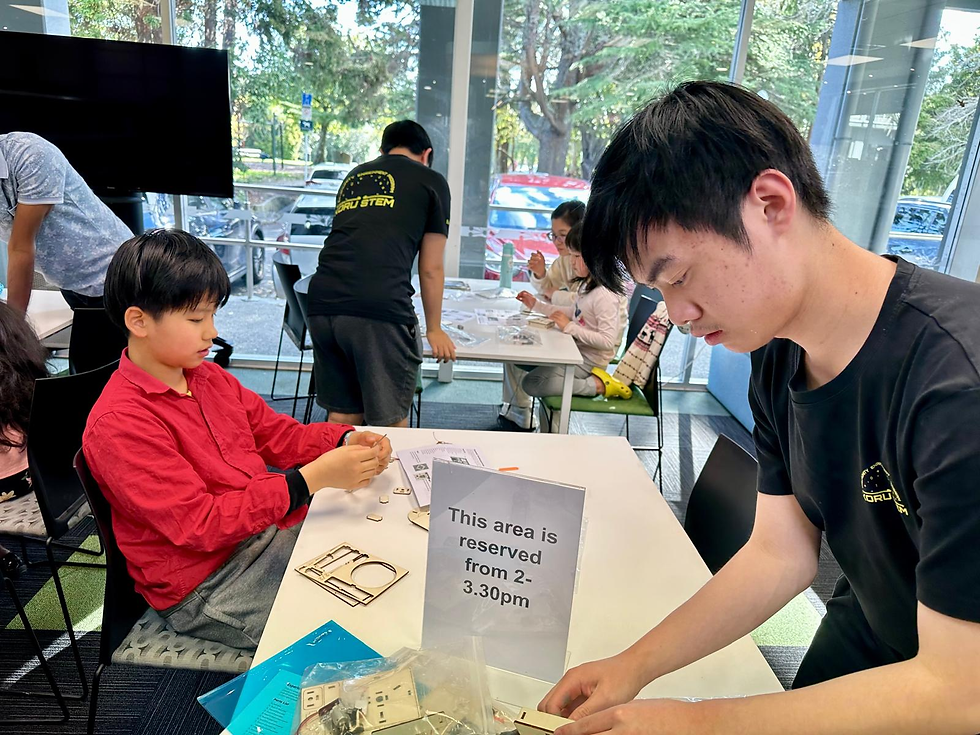
During our May 2026 Library Workshop, we explored the fascinating physics and earth & environmental science behind tornados. Participants built a tabletop electric vortex generator using a laser-cut wooden frame, a small electric motor, and a clear vortex chamber. Once assembled, the device created a visible spinning column of air that resembled a miniature tornado. By building and experimenting with their own electric vortex generators, participants gained a deeper understanding of how rotating air can create a tornado-like vortex and observed several important STEM concepts in action.
How the Electric Vortex Generator Works
The electric vortex generator uses a battery-powered motor to spin a small fan inside the wooden base. The rotating fan forces air to move in a circular motion, creating a vortex inside the clear chamber. As the air spins, the pressure in the centre becomes lower than the surrounding air, causing air to be drawn inward and upward. This produces the visible tornado-shaped column.
Through this project, participants explored several important STEM concepts:
Electrical circuits – how a battery powers a motor.
Energy conversion – electrical energy is converted into rotational (kinetic) energy.
Rotational motion – the spinning fan creates circular airflow.
Air pressure – lower pressure develops in the centre of the vortex.
Fluid dynamics – moving air behaves like a fluid and forms a stable swirling column.
Preparation Challenge
One of the main challenges during preparation was achieving a vortex that was both visible and stable. During testing, we found that small changes in the fan position and the alignment of the chamber could significantly affect the shape of the tornado. After several trial builds, the team adjusted the mounting position of the motor and fan to produce a clearer vortex for participants.
On the Day
All participants who had signed up attended the workshop, and all 25 available places were filled. Children were highly engaged throughout the session, especially when connecting the motor and watching their tornado form for the first time. Participants compared the strength and shape of their vortices and helped one another troubleshoot airflow and assembly issues.
Feedback
Year 5 participant said “It was cool to see a tiny tornado appear inside the cup. I liked turning the motor on and watching the air spin.”
Year 6 participant said “Building the vortex machine helped me understand how a tornado forms. I learned that spinning air creates lower pressure in the middle and pulls air upward.”